Measured drying after the visible water is gone
Structural Drying in Grand Island, Nebraska
Extraction removes obvious water; structural drying addresses the moisture left inside materials. Grand Island Water Damage Restoration helps owners dry wet drywall, trim, framing, subfloor, basements and crawl spaces after plumbing failures, storm water, appliance leaks and flood cleanup.
Why drying needs measurements
A room can look normal while moisture remains behind baseboards or inside lower wall sections. Paint may hold its color, carpet may feel only slightly damp and framing may stay wet where air cannot move. In Grand Island, that hidden moisture often follows a basement leak, a frozen pipe thaw, a roof leak after heavy wind or a supply-line failure in a kitchen, bath or laundry room.
Structural drying starts by mapping the affected area. Moisture readings help separate materials that can dry in place from materials that may need removal. That matters because drying too little can leave a property with odors, swelling or mold risk, while removing too much can drive up repair disruption. A measured plan keeps the cleanup focused on the actual loss.
- Moisture readings for affected rooms and adjacent spaces
- Drying plans for drywall, trim, subfloor, framing and basement materials
- Air movement and dehumidification recommendations
- Progress checks based on readings rather than guesswork
- Documentation of affected areas before repairs begin
When structural drying is needed
Drying is usually needed after emergency water extraction, but it can also be necessary when there was never much standing water. A slow refrigerator line, wet vanity wall, roof leak or seepage along a foundation can leave materials damp for days. If the source was found late, the structure needs a closer look before cosmetic repairs begin.
Basements, utility rooms and finished lower levels deserve special attention because moisture can collect along slab edges, under pad and behind stored contents. Commercial and agricultural support buildings may have different concerns: wet offices next to shop space, storage rooms with cardboard inventory, break rooms, mechanical rooms or long walls where water traveled under base trim. The drying plan should fit the room, the materials and the way the property is used.
How the response is handled
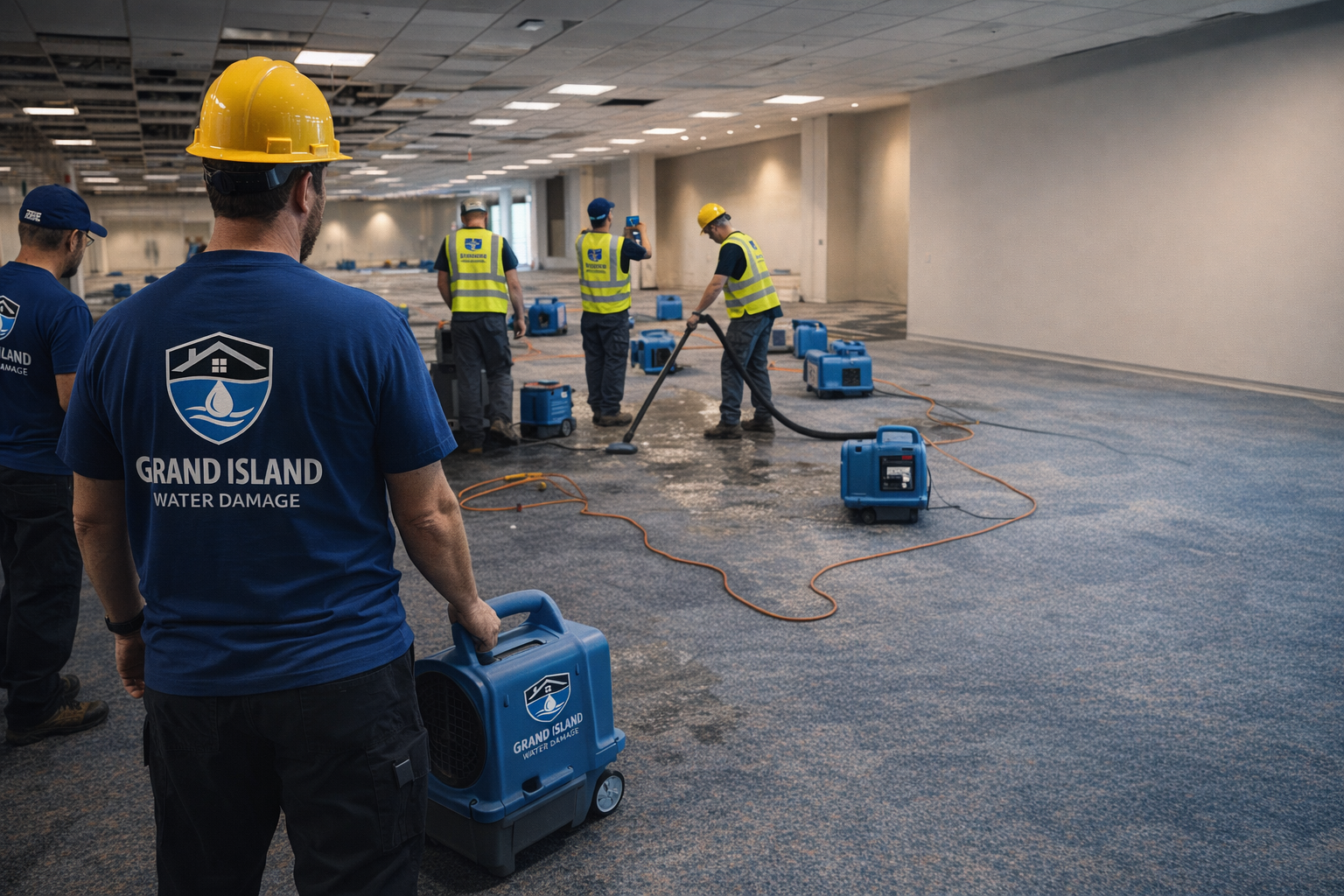
- Map the wet areas, including spaces next to and below the visible damage.
- Decide what can be dried in place and what may need removal.
- Control humidity and airflow to pull moisture out of materials.
- Recheck readings before closing walls, replacing flooring or repainting.
Drying decisions for central Nebraska properties
Central Nebraska weather can swing from freezing pipe risk to severe thunderstorms in the same year. That variety makes drying decisions different from one loss to the next. A burst copper line may soak a wall cavity from above, while storm runoff may load a basement from the floor up. A sump pump issue may affect concrete, carpet, pad and stored items at the same time.
Grand Island Water Damage Restoration looks at the path of moisture, not just the room where the water appeared. That may include checking an adjacent closet, the room below a bath leak, lower cabinetry near an appliance or the backside of a wall shared with a wet utility room. If the loss may involve a claim, the same moisture notes can support insurance documentation so the drying and repair conversation is easier to follow.
Why drying records matter
A drying plan is easier to trust when the record shows what was wet, where readings were taken and how the numbers changed. That information helps the owner understand why equipment stayed in place, why a wall section was opened or why a material was left to dry instead of removed. It also gives repair contractors a clearer point to begin once mitigation work is complete.
Good records are especially useful for mixed-use properties and finished basements where several materials meet in one area. Concrete, wood trim, drywall, carpet pad and contents all dry differently. A single visual inspection can miss that difference, but a measured drying record helps the next decision match the actual condition of the property.
Drying should happen before repairs hide the problem
Replacing baseboards, repainting walls or reinstalling flooring too early can trap moisture where it is harder to address. If materials are still wet, ask for readings and a drying plan before moving into repairs. For odor or growth concerns after a delayed cleanup, pair drying with mold prevention guidance.
Need drying help after water damage?
Call (308) 773-4479 and share the affected rooms, water source and when it started.
Call now