Containment-first cleanup for contaminated water
Sewage Backup Cleanup in Grand Island, Nebraska
A sewage backup is different from a clean-water leak. Contaminated water can affect floors, walls, contents and air quality, so the priority is to keep people out of the area, identify where the water traveled and plan cleanup before foot traffic spreads the problem.
Why sewage cleanup requires a cautious plan
Drain backups, toilet overflows and contaminated water events need a different response than a broken supply line. Porous materials may not be safe to dry in place. Flooring, trim, drywall, insulation and stored contents may need careful separation. The goal is to control the affected area first, then make drying and removal decisions based on contamination risk and moisture spread.
In Grand Island and nearby central Nebraska communities, sewage backups can affect basements, lower-level bathrooms, utility rooms, rental homes, small businesses and older plumbing layouts. The water may look limited at first, but it can travel under flooring or wick behind baseboards. If storm water and drain water are involved together, cleanup should be planned as a safety-first job rather than a simple water extraction call.
- Containment guidance before foot traffic spreads contamination
- Removal recommendations for affected porous materials
- Cleanup planning for drain backups, toilet overflows and contaminated water
- Odor and moisture control after the affected area is stabilized
- Documentation of damaged rooms and materials for records
What to avoid after a drain backup
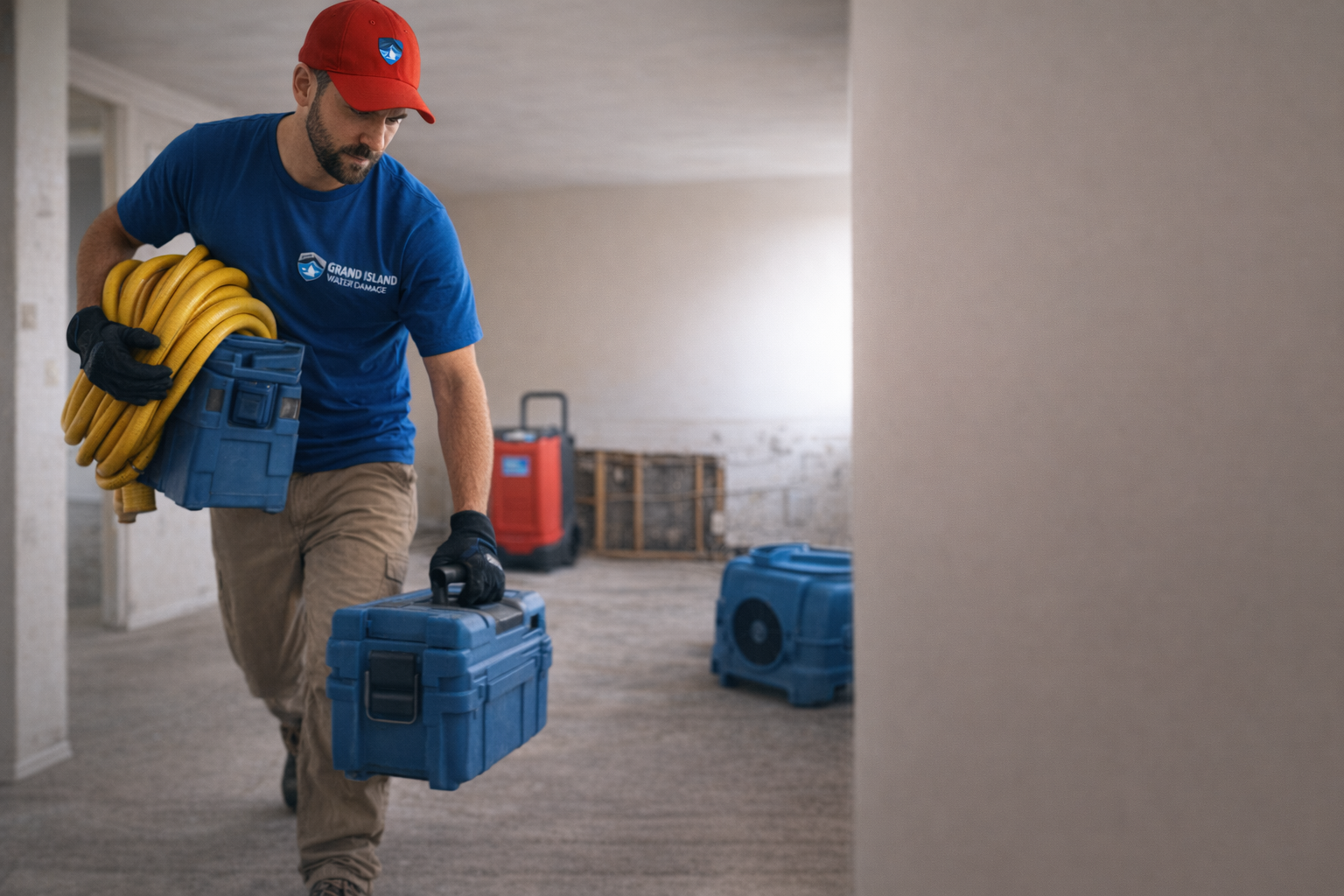
Keep children, pets and unnecessary foot traffic away from the affected rooms. Do not run fans across contaminated water or drag wet contents through clean spaces. Avoid using a household vacuum, mop bucket or towels as the main cleanup method, especially when water touched carpet, pad or porous storage items. Those actions can spread contamination and make later cleanup harder.
If safe, note where the water appeared and when it was discovered. Take photos from a dry doorway. If plumbing is still backing up, stop using nearby fixtures until the source is addressed. Once the source is controlled, cleanup can move into removal, drying and documentation. For claim-related records, the same photos and notes may support insurance documentation.
Do not assume a small backup is harmless because it stayed in one corner. Water can move under vinyl, along grout lines, into carpet pad or behind low trim before the surface looks saturated. A careful scope protects the clean parts of the property while the affected area is handled.
How the response is handled
- Keep people and pets away from affected areas until the scope is understood.
- Identify whether the water is contaminated and where it traveled.
- Remove or isolate materials that cannot be safely cleaned in place.
- Dry the remaining structure after cleanup so moisture does not create a second problem.
Cleanup, drying and odor control after contamination
After contaminated materials are removed or isolated, the structure still needs drying. Moisture left in framing, concrete edges or wall cavities can create odor and mold risk. That is why sewage cleanup connects to structural drying once the unsafe materials have been addressed. Drying equipment and humidity control should be used only after the contamination plan is clear.
Grand Island Water Damage Restoration keeps the service practical: find the affected area, reduce spread, document what was touched and help the owner understand what happens next. That approach works for homes in Grand Island, small businesses in Hastings and residential properties around Doniphan, Wood River and surrounding communities.
How contaminated-water documentation helps
Sewage backup records should be clear about the rooms affected, the likely source, where water traveled and which materials were considered unsafe to keep. Photos taken before removal can help explain why carpet, pad, base trim, contents or lower drywall needed attention. Notes about access limits also matter because crews may restrict movement through affected rooms while the contamination plan is being set.
After cleanup, the record should separate contamination work from drying work. That distinction helps the owner understand why certain materials were removed first and why drying equipment was used only after the area was stabilized. It also gives the next repair contractor a better picture of what was touched and what still needs rebuilding.
Sewage water needs careful cleanup
Drain backups and contaminated water can affect floors, walls, contents and indoor air. Keep people and pets away from the area and call for cleanup guidance. If the area stays wet after cleanup, ask about mold prevention and follow-up moisture checks.
Need sewage backup cleanup in Grand Island?
Call (308) 773-4479 and share the affected rooms, water source and when it started.
Call now